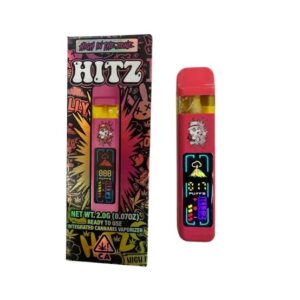

Top Hardware Trends Shaping the vaping industry hardware trends
The vaping industry hardware trends, adult vapor category moves at a pace rarely seen in consumer electronics. Hardware designs that were considered cutting-edge just two years ago have rapidly evolved into baseline expectations, replaced by sophisticated engineering that emphasizes longevity, user control, and crystal-clear diagnostics. vaping industry hardware trends
Today’s hardware landscape is defined by the convergence of advanced micro-chipsets, high-density battery cells, multi-element thermal atomizers, and user-centric interfaces. vaping industry hardware trends
Whether you are a retail operator tracking catalog shifts or an adult consumer curious about the tech driving your daily device, here are the top vaping industry hardware trends redefining the modern marketplace. vaping industry hardware trends
1. High-Definition Smart Screens and UI Dashboards
The era of simple blinking LED indicator lights is officially over. Full-color smart screens have transformed how users monitor and interact with their devices. vaping industry hardware trends
+---------------------------------------------------------------------------------+
|                       SMART DISPLAY FEATURE PROGRESSION                         |
+------------------------------+--------------------------------------------------+
| Legacy Indicators            | Single LED blinking light indicating low battery |
| Second-Gen Screens           | Basic 2-digit numerical battery percentage       |
| Modern HD Smart Dashboards   | Full-color TFT/LCD screens tracking fluid levels,|
|                              | active wattage, power modes, and animations      |
+------------------------------+--------------------------------------------------+
Modern high-capacity devices feature integrated TFT and LCD displays that report real-time battery percentages, remaining e-liquid volume estimates, and active wattage outputs. Higher-end models even incorporate interactive UI animations that adjust dynamically depending on whether the device is firing in Eco or Boost mode. This shift toward complete diagnostic transparency eliminates user guesswork entirely. vaping industry hardware trends
2. Multi-Mesh Architecture and Dynamic Firing Modes
As e-liquid capacities expanded to 20mL, 28mL, and beyond, single wire and simple mesh coils reached their physical limits. Maintaining flavor fidelity across thousands of draws required a breakthrough in thermal management: multi-mesh coil matrix systems.
Dual and Triple Mesh Heating Elements: By placing two or three distinct mesh grids within a single atomizer chamber, devices distribute heat across a wider surface area.
Alternating Firing Cycles: Micro-chipsets switch activation between Coils A and B on alternating puffs, allowing each element time to cool and re-saturate. This prevents carbon buildup and ensures flavor stays fresh deep into the device’s lifespan.
Selectable Wattage Tiers (Eco vs. Boost): Users can toggle between conservative single-mesh firing to stretch battery life, or dual-mesh simultaneous firing for warmer vapor and denser cloud production.
- vaping industry hardware trends
3. Modular “Dock-and-Pod” Eco Architecture
With rising puff counts comes a renewed focus on environmental sustainability and reducing electronic waste. Discarding a heavy lithium-ion battery cell every time an e-liquid tank empties is neither economical nor eco-friendly.
This challenge gave rise to modular disposable systems. vaping industry hardware trends
  REUSABLE BATTERY DOCK (Base Unit)
  [ Contains high-capacity rechargeable battery cell & smart screen display ]
                                 ▲
                                 │ Magnetic Docking Interface
                                 ▼
  REPLACEABLE POD CAPSULE (Juice Pod)
  [ Contains pre-filled e-liquid reservoir & mesh heating coil ]
Instead of throwing away the entire housing, modular setups allow users to retain a high-quality, reusable battery dock while simply snapping in replacement pre-filled fluid pods. This approach dramatically reduces battery waste while retaining the plug-and-play convenience that makes disposables so popular.
4. Rapid USB-C Charging and Intelligent Power Management
Battery capacity is no longer just about raw milliampere-hour (mAh) size—it is about charging efficiency and battery health management:
Sub-30 Minute Charging: Upgraded Type-C pass-through circuitry allows modern high-capacity vapes to charge from 0% to 80% in under half an hour.
Overcharge Protection Protocols: Integrated chipsets prevent trickle-charge stress, heat buildup, and voltage spikes, ensuring the internal battery remains stable across dozens of recharge cycles.
- vaping industry hardware trends
Final Thoughts
The vaping industry hardware trends of today point toward a future focused on intelligence, efficiency, and sustainability. By combining real-time screen diagnostics, multi-mesh thermal engineering, and modular battery systems, manufacturers have elevated disposable hardware into a sophisticated, premium product category that delivers unmatched reliability for adult users. vaping industry hardware trends