Synthetic Nicotine (Tobacco-Free Nicotine) vs. Traditional Nicotine
Flip over almost any modern disposable vape or 30mL nicotine salt bottle on a US retail shelf, and you will likely spot a three-letter acronym stamped prominently on the packaging: TFN, or Tobacco-Free Nicotine. Synthetic Nicotine vs. Traditional Nicotine
For decades, every drop of nicotine used in cigarettes, cessation patches, gums, and early e-liquids came from a single agricultural source: harvesting, curing, and chemically extracting alkaloids from Nicotiana tabacum (the tobacco plant). Today, however, laboratory-synthesized nicotine—created entirely without tobacco leaves, stems, or agricultural soil—powers a massive share of premium e-liquids and high-capacity disposables. Synthetic Nicotine vs. Traditional Nicotine
To the average adult vaper, that shift raises plenty of practical questions. Is synthetic nicotine actually the same molecule as regular nicotine? Does it hit harder or feel smoother on the throat? Why do some bottles taste noticeably cleaner, while older TFN formulas occasionally felt slightly weaker at the same milligram rating? Synthetic Nicotine vs. Traditional Nicotine
In this comprehensive editorial breakdown of Synthetic Nicotine (Tobacco-Free Nicotine) vs. Traditional Nicotine, we strip away marketing buzzwords and dive into the real organic chemistry—comparing agricultural extraction against chiral laboratory synthesis, unpacking S-isomer vs. R-isomer potency, and explaining how both formulations perform inside your pod system or sub-ohm tank. Synthetic Nicotine vs. Traditional Nicotine
1. How Each Form Is Made: Agricultural Extraction vs. Lab Synthesis
Although both compounds share the exact same chemical formula—$\text{C}_{10}\text{H}_{14}\text{N}_2$—their journey from raw starting material to the e-liquid bottle inside your pocket could not be more different. Synthetic Nicotine vs. Traditional Nicotine
  PRODUCTION PIPELINE: TRADITIONAL EXTRACTION VS. SYNTHETIC TFN

  Traditional Tobacco-Derived Nicotine:
  [ Cured Tobacco Leaves ] ➔ Solvent Extraction & Steam Distillation ➔ Multi-Stage Purification ➔ ~99.3% S-Nicotine + Trace Alkaloids

  Synthetic Tobacco-Free Nicotine (TFN):
  [ Non-Tobacco Precursors ] ➔ Multi-Step Organic Synthesis ➔ Chiral Separation / Purification ➔ Pure S-Isomer (or Racemic R/S)
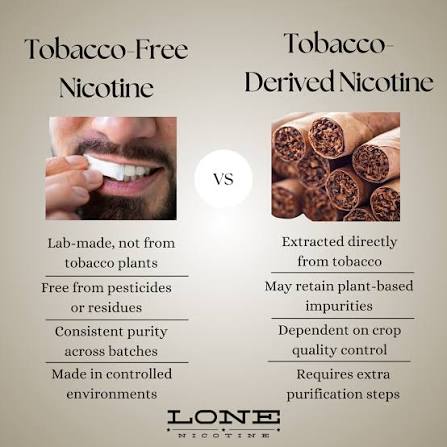
Traditional Tobacco-Derived Nicotine
To produce traditional USP-grade nicotine, processors start with cured tobacco leaves and stems—often agricultural byproducts from the leaf industry.
Chemical Extraction: Crushed tobacco biomass is treated with alkaline solutions and organic solvents (or supercritical $\text{CO}_2$) to strip the nicotine alkaloid out of the plant fibers.
Distillation & Trace Compounds: Even after high-vacuum fractional distillation achieves 99.5%+ pharmaceutical purity, tobacco-derived nicotine naturally carries microscopic trace amounts of minor tobacco alkaloids—such as nornicotine, anatabine, anabasine, and cotinine. While harmless in trace quantities, these residual compounds contribute a subtle, earthy, peppery undertone to the raw liquid.
- Synthetic Nicotine vs. Traditional Nicotine
Synthetic Nicotine (Tobacco-Free Nicotine / TFN)
Synthetic nicotine never touches a tobacco plant, seed, or agricultural field at any stage of production.
From-Scratch Synthesis: Chemists assemble the nicotine molecule step by step inside a sterile laboratory using non-tobacco chemical starting blocks (such as nicotinic acid esters, myosmine derivatives, or pyridine precursors).
Zero Botanical Impurities: Because no plant biomass enters the reaction vessel, the finished nicotine contains zero tobacco-specific nitrosamines (TSNAs) and zero minor tobacco alkaloids. What comes out is an odorless, colorless, crystal-clear liquid with no botanical baggage.
- Synthetic Nicotine vs. Traditional Nicotine
2. Master Comparison Matrix: TFN vs. Traditional Nicotine
Before examining molecular chirality and flavor expression in detail, review how synthetic TFN and traditional tobacco-derived nicotine compare across everyday performance factors: Synthetic Nicotine vs. Traditional Nicotine
+----------------------------------------------------------------------------------------------------+
|                     SYNTHETIC NICOTINE (TFN) VS. TRADITIONAL NICOTINE MATRIX                       |
+------------------------------+-----------------------------------+---------------------------------+
| Comparison Factor            | Synthetic Nicotine (TFN)          | Traditional Tobacco Nicotine    |
+------------------------------+-----------------------------------+---------------------------------+
| Raw Source Material          | Non-tobacco laboratory precursors | Harvested *Nicotiana* plants    |
| Molecular Formula            | C10H14N2 (Identical structure)    | C10H14N2 (Identical structure)  |
| Stereoisomer Profile         | Pure S-isomer (modern) or 50/50   | ~99.3% S-isomer / ~0.7% R-isomer|
|                              | R/S racemic mix (early generation)| (Naturally occurring ratio)     |
| Botanical Impurities & TSNAs | Zero (No plant alkaloids present) | Trace minor alkaloids (<0.5%)   |
| Raw Odor & Color             | Virtually colorless & odorless    | Faint earthy/nutty aroma;       |
|                              |                                   | oxidizes faster to pale amber   |
| Flavor Clarity in E-Liquid   | Ultra-clean; lets delicate fruit  | Subtle warm/peppery undertone;  |
|                              | & bakery top notes shine unmuted  | pairs naturally with tobaccos   |
| Throat Hit Sensation         | Noticeably smoother, cleaner draw | Slightly sharper, classic bite  |
| US Regulatory Status         | Regulated identically by FDA      | Regulated identically by FDA    |
+------------------------------+-----------------------------------+---------------------------------+
3. The Secret Behind Potency: S-Isomer vs. R-Isomer Chemistry
If you tried an early “tobacco-free” e-liquid back around 2019 or 2020 and felt like 50mg TFN hit slightly milder than 50mg regular nic salt, you were not imagining things. The reason comes down to molecular chirality—a fascinating quirk of organic chemistry. Synthetic Nicotine vs. Traditional Nicotine
Just like your left hand and right hand are mirror images that cannot be superimposed on top of each other, the nicotine molecule exists in two mirror-image spatial orientations called stereoisomers:
  CHIRAL STEREOISOMERS OF NICOTINE (C10H14N2)

  [ (S)-Nicotine (Left-Handed) ]  ──► Binds tightly to brain nicotinic receptors ──► Full Biological Potency

  [ (R)-Nicotine (Right-Handed) ] ──► ~10x weaker receptor binding affinity      ──► Milder Biological Effect
1. Natural Tobacco Produces Almost Pure (S)-Nicotine
Inside living tobacco plants, natural enzymes assemble nicotine exclusively in the left-handed configuration. Standard tobacco-derived nicotine consists of roughly 99.3% (S)-nicotine and only 0.7% (R)-nicotine. Because human nicotinic acetylcholine receptors in the brain are shaped specifically to lock onto the (S)-isomer, traditional nicotine delivers full receptor activation per milligram. Synthetic Nicotine vs. Traditional Nicotine
2. Early Racemic TFN vs. Modern Chiral-Pure TFN
First-Generation Racemic Synthetic Nicotine: Early laboratory synthesis produced a 50/50 racemic mixture—half (S)-nicotine and half (R)-nicotine. Because the (R)-isomer binds roughly ten times more weakly to brain receptors, a 50mg racemic TFN bottle delivered roughly the perceived strength of a 28mg–30mg traditional bottle, albeit with an exceptionally smooth throat hit.
Modern Enantiopure (S)-TFN (2024–2026 Standard): Today’s leading synthetic nicotine suppliers (such as Next Generation Labs and pharmaceutical-grade chiral manufacturers) use advanced asymmetric synthesis and chiral resolution to isolate 99%+ pure (S)-nicotine without tobacco plants. Modern S-isomer TFN matches traditional nicotine milligram for milligram in receptor satisfaction while retaining laboratory purity.
- Synthetic Nicotine vs. Traditional Nicotine
4. Flavor Purity & Throat Hit: How TFN Changes Your Vape
For everyday vapers, the biggest noticeable upgrade when switching to a quality Tobacco-Free Nicotine e-liquid happens on your taste buds. Synthetic Nicotine vs. Traditional Nicotine
Zero Peppery Undertones
Traditional nicotine—especially freebase nicotine—carries a faint, natural peppery spiciness from trace plant alkaloids. While that subtle warmth actually complements classic Virginia tobacco, caramel, and coffee e-liquids, it can clash with bright, delicate profiles like watermelon ice, strawberry cream, or blue raspberry. Synthetic Nicotine vs. Traditional Nicotine
Because synthetic TFN lacks botanical impurities:
Crisp Fruit Separation: Delicate top notes—like pear, kiwi, honeydew, and citrus—taste sharper and cleaner, much closer to how the flavorings smell straight from the concentrate bottle.
Smoother Inhale: Many vapers report that TFN feels noticeably softer on the back of the throat, even in 6mg freebase sub-ohm liquids or 35mg–50mg nic salts.
- Synthetic Nicotine vs. Traditional Nicotine
Slower Oxidation & Longer Shelf Clarity
Have you ever left a bottle of traditional e-liquid in a warm drawer for three months and watched it turn dark brown while developing a harsh, peppery bite? Minor plant alkaloids and trace impurities accelerate oxidation when exposed to heat, oxygen, and UV light. Because synthetic TFN starts out free of plant residues, it resists darkening longer and stays crystal-clear on the shelf. Synthetic Nicotine vs. Traditional Nicotine
5. Available in Both Freebase and Nicotine Salt Formulations
A common misconception is that “synthetic nicotine” is a third category separate from freebase and nic salts. In reality, TFN describes where the nicotine came from, while freebase vs. nic salt describes its chemical pH state. Synthetic Nicotine vs. Traditional Nicotine
  COMBINING SOURCE + FORMULATION IN MODERN E-LIQUIDS

  [ Synthetic TFN Base ] ──┬──► Left in Alkaline State  = TFN Freebase (3mg, 6mg for Sub-Ohm Tanks)
                           └──► Combined w/ Benzoic Acid = TFN Nic Salt (25mg, 50mg for Pod Systems)
Whether you run a 75-watt sub-ohm mesh tank with 3mg TFN freebase or a compact MTL pod system with 35mg TFN nic salt, you get the exact same wicking viscosity (70/30 or 50/50 VG/PG) and hardware compatibility as traditional e-liquids. Synthetic Nicotine vs. Traditional Nicotine
6. US Regulatory Status: Is Synthetic Nicotine Still a “Loophole”?
Between 2016 and early 2022, synthetic nicotine experienced an explosive boom across the US vape industry because the original Family Smoking Prevention and Tobacco Control Act defined tobacco products strictly as items “made or derived from tobacco.” Synthetic Nicotine vs. Traditional Nicotine
That regulatory gray area closed permanently in April 2022, when Congress passed bipartisan federal legislation expanding the FDA’s statutory definition of a tobacco product to include any product containing nicotine from any source—explicitly covering laboratory-synthesized Tobacco-Free Nicotine. Synthetic Nicotine vs. Traditional Nicotine
Today in the United States:
Identical Legal Rules: TFN e-liquids and disposables are subject to the exact same 21+ federal minimum age laws, child-resistant packaging mandates, nicotine addiction warning labels, and FDA Premarket Tobacco Product Application (PMTA) standards as traditional tobacco-derived products.
Why Brands Still Use TFN: Even without a regulatory loophole, major manufacturers continue formulating with TFN because vapers prefer its cleaner flavor profile, smoother throat hit, and consistent pharmaceutical-grade purity.
- Synthetic Nicotine vs. Traditional Nicotine
7. Which One Should You Choose?
Both synthetic TFN and traditional tobacco-derived nicotine have earned a permanent spot on modern vape shelves. Use this quick guide to decide which suits your palate:
Choose Synthetic Nicotine (TFN) If: You love crisp fruit, candy, menthol, or light cream e-liquids; you dislike the faint peppery bite of traditional freebase nicotine; or you want maximum flavor clarity and extended shelf stability.
Choose Traditional Tobacco-Derived Nicotine If: You vape classic cured tobacco, RY4 caramel, or rich nutty dessert blends where a subtle botanical warmth enhances authenticity, or you prefer a slightly firmer, traditional throat hit.
- Synthetic Nicotine vs. Traditional Nicotine
Final Verdict
Comparing Synthetic Nicotine (Tobacco-Free Nicotine) vs. Traditional Nicotine reveals how far e-liquid chemistry has matured. While traditional agricultural extraction still delivers reliable satisfaction—especially in classic tobacco and bakery blends—modern enantiopure (S)-isomer TFN matches traditional nicotine milligram for milligram in potency while eliminating residual plant alkaloids. Synthetic Nicotine vs. Traditional Nicotine
The result is an ultra-clean, virtually odorless nicotine base that lets delicate fruit and mint flavorings shine without harshness or rapid oxidation. Whether you choose TFN or traditional nicotine, matching your mg strength and VG/PG ratio to your device remains the key to a smooth, satisfying vape. Synthetic Nicotine vs. Traditional Nicotine
Frequently Asked Questions
Is synthetic nicotine (TFN) chemically identical to tobacco-derived nicotine?
At the molecular formula level ($\text{C}_{10}\text{H}_{14}\text{N}_2$), both are identical. However, traditional tobacco-derived nicotine consists almost entirely of the biologically active S-isomer (~99.3%) alongside trace plant impurities. Early synthetic nicotine was a 50/50 racemic mix of S-isomers and less potent R-isomers, though modern pharmaceutical-grade TFN uses chiral synthesis to achieve pure S-isomer equivalence.
Does tobacco-free nicotine vape juice taste different from regular e-liquid?
Yes, many vapers notice a cleaner, crisper flavor profile with synthetic nicotine. Because TFN is synthesized in a controlled laboratory rather than extracted from cured tobacco leaves, it contains zero residual tobacco alkaloids, waxes, or earthy pepper undertones that can slightly mute delicate fruit and dessert flavorings.
Is synthetic nicotine regulated differently by the FDA in the United States?
No. While synthetic nicotine briefly sat outside traditional tobacco laws prior to 2022, federal legislation expanded the FDA’s Center for Tobacco Products authority to cover nicotine from any source—including laboratory-synthesized Tobacco-Free Nicotine (TFN)—subjecting it to the exact same age restrictions and PMTA compliance requirements.