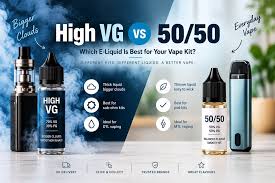
High-PG vs. High-VG E-Liquids: Cloud Chasing vs. Flavor Output
Pick up any bottle of e-liquid and look past the bold flavor name on the front label. Tucked near the ingredients list or nicotine warning, you will always find a pair of numbers separated by a slash: 50/50, 70/30, or 80/20. High-PG vs. High-VG E-Liquids: Cloud Chasing
Those two numbers represent the ratio of Vegetable Glycerin (VG) to Propylene Glycol (PG)—the two colorless, odorless carrier liquids that make up roughly 85% to 95% of every vape juice ever formulated. While nicotine strength dictates your craving satisfaction, the VG/PG balance controls almost every physical sensation of your vape: how thick the clouds look, how sharp the flavor tastes, how hard the vapor hits the back of your throat, and whether your coil lasts three weeks or burns out before dinner. High-PG vs. High-VG E-Liquids: Cloud Chasing
For years, vapers treated this ratio as a simple binary choice: high-PG for flavor, high-VG for clouds. While that rule of thumb holds a grain of truth, modern mesh coil engineering and high-concentration flavorings have added plenty of nuance to how both bases perform. High-PG vs. High-VG E-Liquids: Cloud Chasing
In this exhaustive editorial comparison of High-PG vs. High-VG E-Liquids: Cloud Chasing vs. Flavor Output, we break down the molecular chemistry and boiling points of both carrier liquids, explain how viscosity interacts with cotton wicking ports, and help you match the exact ratio to your hardware and vaping style. High-PG vs. High-VG E-Liquids: Cloud Chasing
1. The Carrier Liquids Decoded: Vegetable Glycerin vs. Propylene Glycol
To understand why changing a ratio by just 20% alters your entire vaping experience, look at the physical chemistry of the two compounds carrying your nicotine and flavorings. High-PG vs. High-VG E-Liquids: Cloud Chasing
  E-LIQUID BASE CHEMISTRY & BOILING POINT COMPARISON

  Propylene Glycol (PG) — The Flavor & Throat Hit Carrier:
  [ Thin, Water-Like Viscosity ] ➔ Boiling Point: 188°C (370°F) ➔ Crisp Flavor + Firm Throat Hit

  Vegetable Glycerin (VG) — The Cloud & Smoothness Base:
  [ Thick, Syrupy Viscosity ]    ➔ Boiling Point: 290°C (554°F) ➔ Dense Clouds + Velvety Inhale
What Is Propylene Glycol (PG)?
Propylene Glycol is a thin, low-viscosity organic compound derived from petroleum or plant synthesis. It has been used safely for decades in asthma inhalers, food flavorings, cosmetics, and pharmaceutical suspensions because it excels at holding volatile aromatic molecules in uniform suspension. High-PG vs. High-VG E-Liquids: Cloud Chasing
Superior Flavor Solvent: PG is thinner than water in terms of surface tension and binds directly to flavor esters. When vaporized, it delivers sharp, distinct top notes—making tart fruits, crisp menthols, and complex tobacco blends pop immediately on the tongue.
The Cigarette-Like Throat Hit: Because PG is mildly hygroscopic (it attracts moisture from mucous membranes) and vaporizes at a lower temperature, it creates a noticeable, peppery kick at the back of the throat that closely replicates smoking a traditional cigarette.
Minimal Visible Vapor: PG vapor dissipates quickly into the air, producing thin, discreet plumes ideal for stealth vaping.
- High-PG vs. High-VG E-Liquids: Cloud Chasing
What Is Vegetable Glycerin (VG)?
Vegetable Glycerin is a thick, syrupy, naturally sweet liquid extracted from plant oils—most commonly palm, soy, or coconut oil. Used widely in baked goods, skin moisturizers, and herbal extracts, VG is the powerhouse behind modern vapor production. High-PG vs. High-VG E-Liquids: Cloud Chasing
Dense Aerosol Clouds: VG has a much higher boiling point (290°C / 554°F) and a heavier molecular weight than PG. When superheated on a low-resistance coil, it produces thick, heavy, opaque clouds that hang in the air.
Smooth, Sweet Undertone: VG carries a mild natural sweetness and coats the throat smoothly, eliminating harshness even when you take deep Direct-to-Lung (DTL) inhales at 80+ watts.
Slower Flavor Release: Because VG is thick and slightly sweet, it can mute sharp, delicate top notes unless manufacturers increase flavor concentrate percentages or pair the liquid with high-surface-area mesh coils.
- High-PG vs. High-VG E-Liquids: Cloud Chasing
2. Master Comparison Matrix: High-PG vs. High-VG E-Liquids
Review how high-PG and high-VG formulations compare across flavor clarity, vapor output, coil wear, and hardware compatibility:
+----------------------------------------------------------------------------------------------------+
|                         HIGH-PG VS. HIGH-VG E-LIQUID PERFORMANCE MATRIX                            |
+------------------------------+-----------------------------------+---------------------------------+
| Performance Metric           | High-PG E-Liquid (50/50 – 60/40)  | High-VG E-Liquid (70/30 – Max)  |
+------------------------------+-----------------------------------+---------------------------------+
| Liquid Viscosity             | Thin, fluid, fast-wicking         | Thick, syrupy, slow-moving      |
| Vapor & Cloud Production     | Discreet, light, dissipates fast  | Massive, dense, heavy clouds    |
| Flavor Profile Expression    | Sharp, crisp, punchy top notes    | Warm, rich, saturated mouthfeel |
| Throat Hit Sensation         | Distinct, firm cigarette-like hit | Ultra-smooth, soft inhale       |
| Boiling Point                | Lower (~188°C / 370°F)            | Higher (~290°C / 554°F)         |
| Coil Gunk & Sweetener Wear   | Minimal residue; clean coil life  | Higher sweetness/residue buildup|
| Ideal Hardware & Coil Class  | MTL Pod Systems & Starter Kits    | Sub-Ohm Tanks, RDAs & Box Mods  |
|                              | (0.8Ω – 1.5Ω / 10W – 20W)         | (0.15Ω – 0.5Ω / 45W – 120W+)    |
+------------------------------+-----------------------------------+---------------------------------+
3. Cloud Chasing vs. Flavor Output: How Coils Change the Equation
Historically, vapers faced an unavoidable trade-off: if you wanted maximum flavor clarity, you ran a 50/50 or 60% PG blend in a tight Mouth-to-Lung atomizer; if you wanted room-filling clouds, you sacrificed flavor sharpness and loaded an 80/20 or Max VG blend into a dual-coil dripper. High-PG vs. High-VG E-Liquids: Cloud Chasing
Today, sub-ohm mesh coil technology has bridged much of that divide—though distinct differences in how you experience flavor still remain. High-PG vs. High-VG E-Liquids: Cloud Chasing
  HOW COIL SURFACE AREA IMPACTS FLAVOR DELIVERY

  [ High-PG in a 12W Pod (0.8Ω–1.2Ω) ]
  Small Vapor Droplet + High PG Solvent ➔ Sharp, bright, high-definition flavor notes (Citrus, Mint, Tobacco)

  [ High-VG in an 80W Mesh Tank (0.15Ω–0.2Ω) ]
  Massive Vapor Volume + Wide Mesh Grid ➔ Warm, dense, full-bodied flavor saturation (Custards, Bakery, Berries)
Why High-PG Excels at Crisp, Bright Profiles
Propylene Glycol does not add sweetness of its own. When you vape a lemon tart, green apple, or dry Virginia tobacco blend in a 50/50 or 60% PG ratio, every sharp citrus note and earthy undertone hits your palate cleanly without being weighed down by syrupy glycerin. High-PG vs. High-VG E-Liquids: Cloud Chasing
Why High-VG Excels at Warm, Layered Profiles
When you vaporize 70/30 VG/PG e-liquid across a wide-bore sub-ohm mesh coil at 75 watts, you are inhaling ten times more total aerosol per second. Even though VG is a weaker flavor solvent per drop than PG, the sheer volume of warm, dense vapor saturates your taste buds completely—making rich vanilla custards, strawberry creams, and dessert pastries taste lush and velvety. High-PG vs. High-VG E-Liquids: Cloud Chasing
4. Viscosity & Wicking Physics: Matching Ratio to Coil Ports
The biggest mistake vapers make when experimenting with VG/PG ratios has nothing to do with taste—it comes down to fluid dynamics inside your coil head. High-PG vs. High-VG E-Liquids: Cloud Chasing
Every vape coil relies on capillary action to pull liquid through cotton ports from the tank onto the heating metal. The size of those juice ports dictates which viscosity your tank can safely handle. High-PG vs. High-VG E-Liquids: Cloud Chasing
  CAPILLARY WICKING & VISCOSITY MATCHING

  Scenario A: Small Pod Ports + 50/50 VG/PG (PERFECT MATCH)
  [ Tiny 1.2mm Wicking Hole ] ◄── Flows Fast ── [ Thin 50/50 Liquid ] ➔ Saturated Cotton & Clean Hits

  Scenario B: Small Pod Ports + 80/20 High-VG (DRY HIT / BURNT COIL)
  [ Tiny 1.2mm Wicking Hole ] ◄── Stalls Out ── [ Thick 80/20 Syrup ] ➔ Starved Cotton & Scorched Taste

  Scenario C: Wide Sub-Ohm Slots + 50/50 Thin Juice (FLOODING & LEAKING)
  [ Massive 4.0mm Wicking Slot ] ◄── Over-Flows ── [ Thin 50/50 Liquid ] ➔ Spit-Back & Bottom Airflow Leaks
What Happens When Liquid Is Too Thick (High-VG in a Pod)
Compact pod cartridges (like the Uwell Caliburn or Vaporesso XROS 1.0Ω pods) have tiny wicking holes designed for thin 50/50 e-liquid. If you fill a small pod with thick 70/30 or 80/20 juice—especially in cold winter weather when VG turns even thicker—the liquid cannot soak into the cotton fast enough between puffs. By your third hit, the cotton dries out and scorches, ruining the pod permanently. High-PG vs. High-VG E-Liquids: Cloud Chasing
What Happens When Liquid Is Too Thin (High-PG in a Sub-Ohm Tank)
Sub-ohm tanks (like the Geekvape Z Sub-Ohm or HorizonTech Falcon) feature huge wicking slots built to feed thirsty 80-watt mesh coils. If you pour thin 50/50 e-liquid into a wide-open sub-ohm tank, gravity pulls the thin fluid straight through the cotton faster than the coil can vaporize it—resulting in loud gurgling, hot spit-back on your tongue, and juice leaking out the bottom airflow slots. High-PG vs. High-VG E-Liquids: Cloud Chasing
5. Decoding Popular VG/PG Ratios: Which Blend Fits Your Routine?
Not every bottle sits at an extreme 80% VG or 60% PG. Here is a practical guide to the four most common ratios found on retail shelves today:
+----------------------------------------------------------------------------------------------------+
|                             POPULAR VG / PG RATIO BUYER'S REFERENCE CHART                          |
+-------------------+---------------------------+----------------------------------------------------+
| VG / PG Ratio     | Primary Characteristic    | Best Hardware & Vaping Style Match                 |
+-------------------+---------------------------+----------------------------------------------------+
| 50% VG / 50% PG   | Balanced viscosity, crisp | Refillable MTL pod systems (0.8Ω–1.2Ω), starter   |
| (Standard Nic Salt| flavor, smooth wicking    | pens, and disposable vape alternatives.            |
+-------------------+---------------------------+----------------------------------------------------+
| 60% PG / 40% VG   | Extra sharp throat hit,   | Classic Mouth-to-Lung tanks, high-resistance coils |
| (or 70% PG / 30%) | minimal visible clouds    | (1.2Ω–1.8Ω), and ex-smokers seeking cigarette bite.|
+-------------------+---------------------------+----------------------------------------------------+
| 70% VG / 30% PG   | Thick clouds, rich flavor,| Standard sub-ohm tanks (0.15Ω–0.4Ω) and RDL pod    |
| (Sub-Ohm Standard)| zero leaking in big ports | mods running between 40W and 90W.                  |
+-------------------+---------------------------+----------------------------------------------------+
| 80% VG / 20% PG   | Heavy competition clouds, | Rebuildable dripping atomizers (RDAs), RTAs, and   |
| (or Max VG)       | ultra-soft inhale         | high-wattage cloud setups (80W–150W+).             |
+-------------------+---------------------------+----------------------------------------------------+
6. PG Sensitivity & Throat Irritation: How to Spot It
While both Propylene Glycol and Vegetable Glycerin are classified as Generally Recognized as Safe (GRAS) by the FDA for food and pharmaceutical use, roughly 5% to 10% of vapers experience mild sensitivity to high concentrations of PG. High-PG vs. High-VG E-Liquids: Cloud Chasing
Watch for these signs if you switch to a 50/50 or high-PG blend:
Persistent Dry Throat or Scratchiness: Because PG absorbs moisture, heavy high-PG vaping without drinking enough water can leave your throat feeling dry or scratchy.
Mild Sinus Irritation or Skin Itchiness: True PG allergies are rare, but mild sensitivities can trigger minor throat tightness or dry skin.
The Easy Fix: If 50/50 juice feels overly dry or scratchy even at low nicotine levels, step up to a 70/30 VG/PG or 80/20 VG/PG liquid paired with a compatible 0.4Ω or 0.6Ω mesh coil. Raising the VG percentage immediately softens the vapor and eliminates PG dryness.
- High-PG vs. High-VG E-Liquids: Cloud Chasing
7. Coil Lifespan & Maintenance Tips for High-VG Liquids
Because Vegetable Glycerin is naturally sweet and viscous, running high-VG e-liquids places slightly higher demands on your coils than thin 50/50 blends. Use these habits to maximize coil longevity:
Check Ambient Temperature: VG thickens noticeably below 60°F (15°C). If you leave your sub-ohm tank in a cold car overnight, warm the tank in your hand for two minutes before firing so the 70/30 juice flows freely into the cotton.
Watch Out for Added Sucralose: While VG itself is mildly sweet, commercial “cloud-chasing” dessert juices often pack heavy artificial sweeteners (sucralose) that caramelize onto hot mesh coils. If your coils turn dark and lose flavor within four days, switch to cleaner fruit or menthol high-VG blends.
Give Thick Juice Extra Priming Time: When installing a fresh sub-ohm coil for 70/30 or 80/20 e-liquid, drip four to five drops of juice directly onto the exposed cotton ports before assembling the tank, then let the filled tank sit upright for a full 8 to 10 minutes before taking your first puff.
- High-PG vs. High-VG E-Liquids: Cloud Chasing
Final Verdict
The debate between High-PG vs. High-VG E-Liquids comes down to aligning your bottle’s viscosity with your atomizer’s airflow and wicking design. High-PG vs. High-VG E-Liquids: Cloud Chasing
If you favor compact pod systems, sharp flavor clarity, discreet vapor plumes, and a crisp throat hit, a 50/50 VG/PG (or high-PG) blend delivers unmatched wicking speed and high-definition taste. If you love dense, room-filling clouds, warm dessert saturation, and an ultra-smooth Direct-to-Lung inhale on a high-wattage sub-ohm tank, 70/30 or 80/20 high-VG e-liquid is built specifically for your setup. Match the viscosity to your coil ports, and you will unlock both peak flavor and maximum coil life from every bottle. High-PG vs. High-VG E-Liquids: Cloud Chasing
Frequently Asked Questions
Which gives better flavor: high-PG or high-VG e-liquid?
Propylene Glycol (PG) is a superior chemical solvent for flavor compounds, delivering sharper, crisper top notes and a stronger throat hit. However, modern high-wattage mesh coils vaporize large volumes of 70/30 high-VG liquid at once, creating a warm, saturated mouthfeel that brings out rich dessert and cream notes. High-PG vs. High-VG E-Liquids: Cloud Chasing
Can I use high-VG e-liquid (70/30 or 80/20) in a compact pod system?
High-VG liquids are thick and viscous, meaning they move slowly through the tiny cotton wicking ports of compact pod systems (0.8 ohm to 1.2 ohm). Using 70/30 or Max VG juice in a small MTL pod often causes dry hits and premature coil burnout. Stick to 50/50 VG/PG blends for pod systems. High-PG vs. High-VG E-Liquids: Cloud Chasing
Why does high-VG e-liquid produce bigger clouds than high-PG?
Vegetable Glycerin (VG) has a higher boiling point (290°C) and a denser molecular structure than Propylene Glycol (188°C). When heated on a low-resistance sub-ohm coil, VG generates thick, heavy aerosol droplets that linger in the air, producing dense vapor clouds. High-PG vs. High-VG E-Liquids: Cloud Chasing